
Puppy Training Basics A Simple Guide to a Well-Behaved Dog
Bringing a new puppy home is one of life’s most joyful experiences. There is the excitement of puppy breath, the softness of new fur, and the promise of unconditional love. But along with the snuggles comes a significant responsibility. Without guidance, that adorable bundle of energy can quickly turn your home upside down. This is where understanding puppy training basics becomes your most valuable tool.
Training isn’t just about teaching tricks; it’s about communication. It is the language you develop to help your new family member navigate a human world they don’t yet understand. Whether you have adopted a timid shelter pup or brought home a boisterous retriever, the fundamental principles remain the same.
In this guide, we will walk you through the essential steps of raising a well-adjusted dog. From the first sleepless nights to mastering the “sit” command, we are here to help you build a relationship based on trust and clarity. Let’s dive into the rewarding journey of shaping your puppy’s future.
Why Training Matters for Your New Best Friend
Many new owners make the mistake of thinking training is something that can wait until the dog is older. In reality, training begins the moment you walk through the door. Investing time in puppy training basics early on prevents bad habits from taking root and builds confidence in your dog.
Safety and Security
A well-trained dog is a safer dog. Commands like “come,” “stay,” and “leave it” aren’t just for show; they can literally save your dog’s life. Imagine your puppy slipping out the front door or picking up something toxic on a walk. Reliable recall and drop commands are crucial safety nets.
Strengthening the Bond
Training is a partnership. When you spend time working with your puppy, rewarding them for good choices, you create a positive association with your presence. They learn to look to you for guidance rather than making impulsive decisions. This deepens the emotional bond between pet and owner, transforming you from a mere provider of food into a trusted leader.
Understanding How Puppies Learn
Before we get into specific techniques, it helps to understand what is going on inside that furry head. Puppies do not speak English, and they don’t inherently know “right” from “wrong.” They understand consequences.
Positive Reinforcement
The gold standard in modern dog training is positive reinforcement. This means rewarding the behaviors you want to see repeated.
- The Reward: This can be a high-value treat, a favorite toy, or enthusiastic praise.
- The Timing: Dogs live in the moment. The reward must happen immediately after the desired action (within seconds) for the puppy to make the connection.
Avoiding Punishment
Old-school methods often relied on fear or dominance, but research shows these can be detrimental. Yelling at a puppy for an accident they had an hour ago only teaches them to fear you, not to avoid the accident. They won’t connect your anger with the puddle on the floor; they will just see an unpredictable, scary human.
For a deeper look into canine psychology, the American Veterinary Society of Animal Behavior offers excellent resources on why positive reinforcement is the most effective method.
The First Week: House Training a Puppy
One of the first and most urgent challenges you will face is house training a puppy. It requires vigilance, a strict schedule, and plenty of enzymatic cleaner.
Establish a Routine
Puppies thrive on predictability. Their tiny bladders simply cannot hold it for long. A good rule of thumb is that a puppy can hold their bladder for one hour for every month of age, plus one. However, during activity, they need to go much more frequently.
- Morning: Immediately upon waking up.
- Meals: Shortly after eating or drinking.
- Play: After vigorous play sessions.
- Sleep: Right before bed and immediately after naps.
Spot the Signs
Learn your puppy’s “potty dance.” Sniffing the ground intently, circling, or whining are all indicators that you have about ten seconds to get them outside.
Praise, Don’t Scold
When your puppy goes outside, throw a party. Praise them lavishly and give them a treat right there on the grass. If you catch them having an accident inside, calmly interrupt them (a gentle clap helps) and take them outside immediately. If you find a mess later, just clean it up. Rubbing their nose in it is an outdated myth that does nothing but breed distrust.
Creating a Safe Haven: Puppy Crate Training Tips
Crate training is often misunderstood. Some view it as a cage, but when done correctly, a crate becomes a den—a safe, cozy retreat where your puppy can relax. It is also an invaluable tool for house training and keeping your puppy safe when you can’t supervise them.
Here are our top puppy crate training tips:
1. Choose the Right Size
The crate should be large enough for the puppy to stand up, turn around, and lie down comfortably, but no larger. If it’s too big, they may use one corner as a bathroom and the other for sleeping. Many crates come with dividers that allow you to adjust the size as your puppy grows.
2. Create Positive Associations
Never use the crate as punishment. You want your dog to love their space.
- Feed meals in the crate: Start with the door open, then gradually close it as they get comfortable.
- Hidden treasures: Hide treats or safe toys inside for them to discover.
- Comfort: Add a soft blanket or an old t-shirt that smells like you.
3. Start Slow
Don’t just shove the puppy in and leave for four hours. Start with short intervals of 5-10 minutes while you are in the same room. Gradually increase the time and distance. If they whine, wait for a moment of silence before letting them out so you don’t inadvertently teach them that whining opens the door.
Socialization: The Key to a Confident Dog
Socialization is about exposure, not just interaction. It means introducing your puppy to the world—different sights, sounds, textures, people, and other animals—in a positive way. The critical socialization window closes around 14-16 weeks of age, so early exposure is vital.
What to Expose Them To
- Surfaces: Grass, concrete, tile, carpet, gravel, and wet pavement.
- Sounds: Vacuum cleaners, traffic, thunderstorms (via recordings initially), and doorbells.
- People: Men with beards, people wearing hats, children, and people in uniforms.
- Handling: Gently touching their paws, ears, and mouth prepares them for vet visits and grooming.
The Rule of Safety
Until your puppy is fully vaccinated, avoid high-traffic dog areas like dog parks. Instead, arrange playdates with healthy, vaccinated adult dogs you know. Carry your puppy in public spaces or use a stroller so they can see the world without risking illness.

Basic Puppy Commands Every Dog Should Know
Once your puppy has settled in, you can start working on basic puppy commands. Keep training sessions short (5-10 minutes) and fun. Always end on a high note with a success.
1. Sit
This is usually the first command puppies learn because it’s a natural behavior.
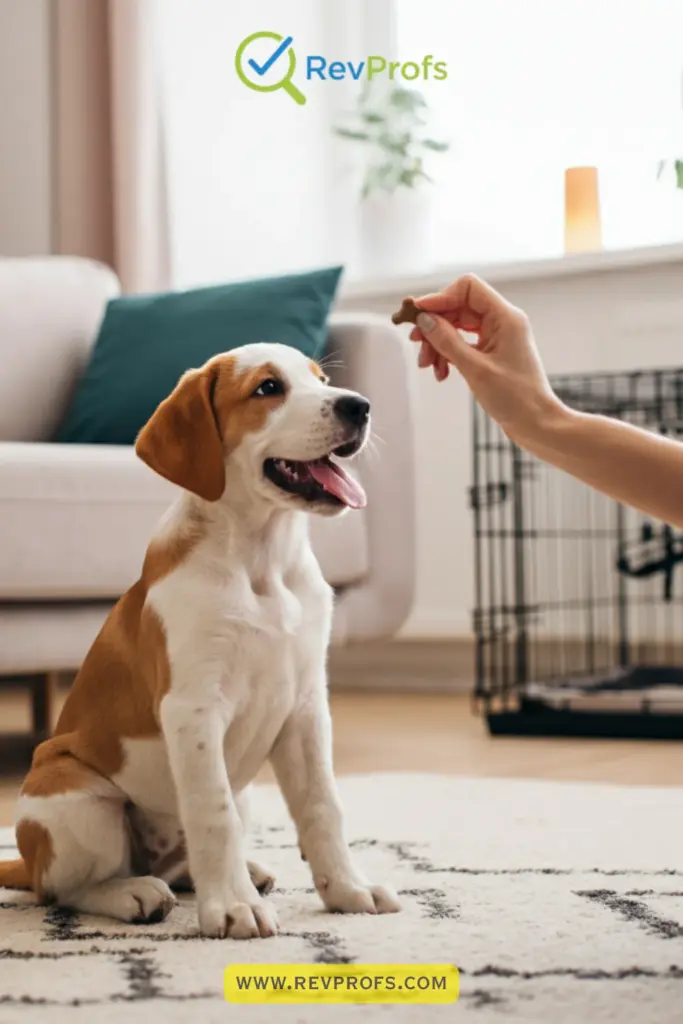
- Hold a treat close to your puppy’s nose.
- Move your hand up, allowing their head to follow the treat and causing their bottom to lower.
- Once they are in a sitting position, say “Sit,” give them the treat, and share affection.
2. Come (Recall)
This is crucial for safety.
- Get down on their level and open your arms.
- Use an excited, happy voice to say their name and “Come!”
- When they arrive, reward them heavily. Never call your puppy to you for something unpleasant (like a bath or medicine); go to get them instead.
3. Stay
This teaches impulse control.
- Ask your puppy to sit.
- Open your palm in front of you and say “Stay.”
- Take one step back. If they stay, reward them. If they get up, calmly reset them and try again without stepping back as far.
- Gradually increase distance and duration over weeks.
4. Leave It
Essential for preventing them from eating dangerous items on walks.
- Hold a treat in a closed fist. Let them sniff and lick your hand.
- Wait for them to stop trying and pull away. The second they pull back, say “Leave it” and give them a treat from your other hand.
- They learn that ignoring the forbidden item yields a better reward.
For more on gear that helps with training, check out our review of Best Dog Harnesses for Walking
Managing Puppy Biting and Chewing
“Land shark” is a common nickname for puppies, and for good reason. Nipping and chewing are normal behaviors for teething puppies exploring their world, but they need to learn boundaries.
Bite Inhibition
Puppies learn bite inhibition from their littermates. If they bite too hard during play, the other puppy yelps and stops playing. You can mimic this.
- When teeth touch skin, make a high-pitched “Ouch!” sound.
- Immediately stop playing and go limp or turn away for 10-20 seconds.
- Resume play. If they bite again, repeat. They will learn that teeth on skin equals the end of fun.
Redirecting Chewing
If you catch your puppy chewing on a shoe or furniture leg, don’t just say “No.” You must tell them what to do.
- Interrupt the behavior.
- Immediately offer an appropriate chew toy.
- When they start chewing the toy, praise them enthusiastically.
Always ensure you have plenty of varying textures (rubber, rope, plush) available so they have good options.
Patience and Consistency: The Golden Rules
If there is one secret to mastering puppy training basics, it is consistency. Everyone in your household must be on the same page. If you don’t allow the puppy on the couch, but your partner invites them up for cuddles when you aren’t looking, the puppy will be confused.
The Teenage Phase
Around 6-10 months, your puppy will hit adolescence. They may seem to “forget” everything they learned and test boundaries. This is normal. Regress to basics if needed, increase exercise, and maintain your routine. This phase passes, but your consistency during it will determine their adult behavior.
When to Seek Help
If you feel overwhelmed or if your puppy shows signs of aggression or extreme fear, do not hesitate to contact a professional trainer. Look for a trainer who is CCPDT certified and uses positive reinforcement methods.
For further reading on developmental stages, the American Kennel Club provides a comprehensive timeline of what to expect.
Conclusion
Raising a puppy is a marathon, not a sprint. There will be days when you feel like a professional trainer, and days when you find a chewed-up remote control and wonder what you got yourself into. Remember, every interaction is a teaching moment.
By focusing on these puppy training basics—establishing a routine, using positive reinforcement, and prioritizing socialization—you are laying the groundwork for a lifetime of companionship. Be patient with your puppy, and be patient with yourself. You are building a bond that is unconditional and unique.
Take a deep breath, grab a handful of treats, and enjoy the process. The loyal, well-behaved dog you are dreaming of is right there, learning from you every single day.
If you are looking for the best treats to help with your sessions, take a look at our list of Healthy Training Treats for Puppies
Ready for the Next Step?
Your pet's journey doesn't end here. Explore our expert guides to ensure they get the best care at every stage.
Puppy & Dog Care
From choosing the right food to understanding their behavior, our dog care guides cover everything you need to know.
Explore Dog GuidesGear & Product Reviews
Find honest, in-depth reviews on the latest pet gear, from smart collars to durable toys, and make informed decisions.
See All Reviews