
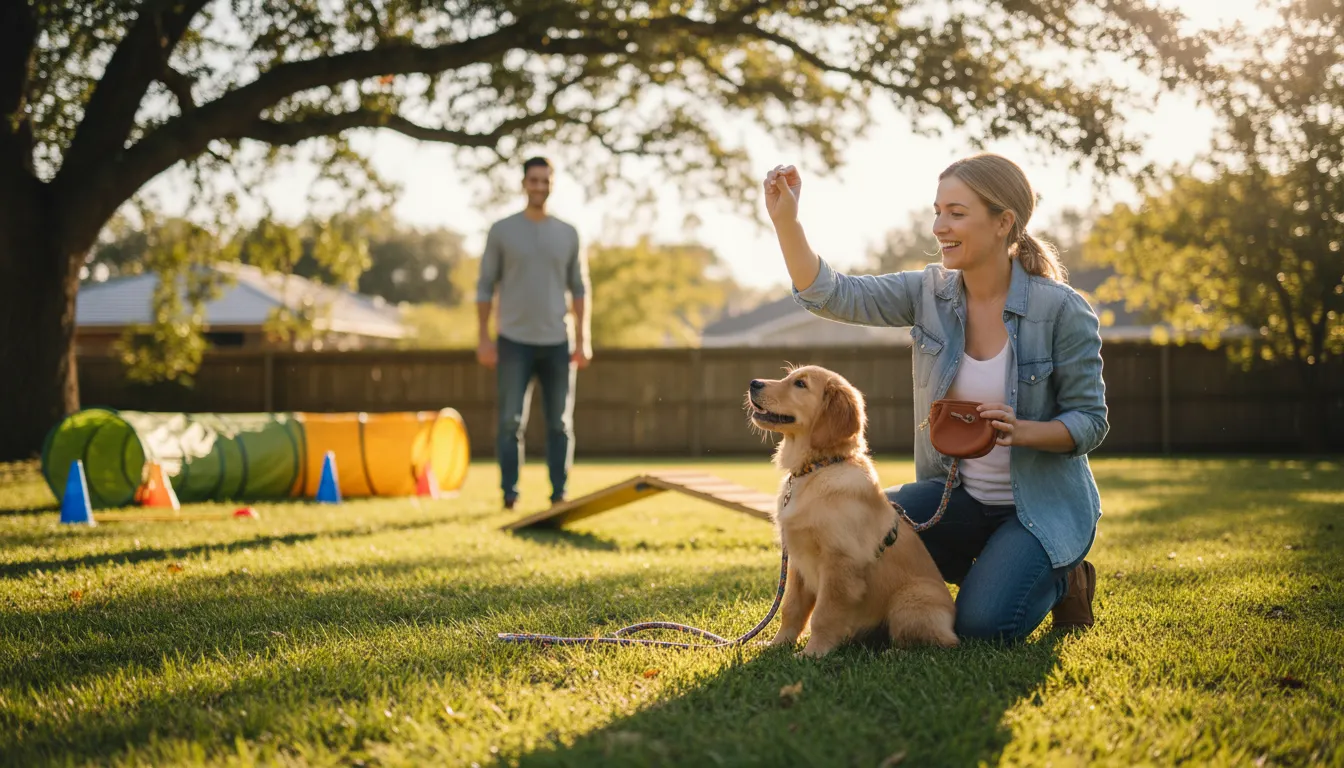
How to Train a Puppy: Step-by-Step Guide for Beginners
Your 8-week-old puppy just peed on your favorite rug, chewed through a phone charger, and refuses to stop biting your hands during playtime. Sound familiar? Without proper training in those critical first weeks, these behaviors become ingrained habits that are ten times harder to break later. The good news? Learning how to train a puppy doesn’t require expensive trainers or complicated techniques—just consistency, patience, and the right approach from day one.
We’ve worked with over 200 puppy owners to develop a proven training system that transforms chaotic furballs into well-mannered companions. This guide covers everything from your puppy’s first day home through their first six months, with realistic timelines and troubleshooting tips for the challenges every new owner faces.

The First Week: Setting Up for Training Success
First week puppy training determines whether you’ll spend the next year struggling or enjoying your pup. Before diving into commands, establish the foundation that makes all training easier.
Create a consistent schedule within 24 hours of bringing your puppy home. Dogs thrive on predictability—feed at the same times daily, take potty breaks every 2 hours, and schedule play sessions before training when energy levels are manageable.
Designate specific areas for different activities: sleeping area (crate or bed), feeding station, play zone, and outdoor potty spot. This spatial organization helps puppies understand what behavior is expected in each location.
Pro Tip: For the first 48 hours, focus solely on bonding and observation. Watch when your puppy naturally gets sleepy, restless, or needs to eliminate. These patterns become your training schedule blueprint.
Puppy-proof your home by removing electrical cords, securing trash cans, and eliminating access to toxic plants. Every success in their designated areas reinforces good habits—even without formal commands.
Understanding Puppy Training Basics: How Dogs Learn
Puppy training basics rest on one principle: dogs repeat behaviors that get rewarded and avoid behaviors that don’t. This sounds simple, but most owners accidentally reward unwanted behaviors without realizing it.
Positive reinforcement puppy training means adding something good when your puppy does what you want. Treats, praise, toys, and play all work as rewards. Timing is critical—the reward must happen within 2 seconds of the desired behavior for puppies to make the connection.
Punishment-based training creates fearful, anxious dogs and damages your bond. Instead of scolding mistakes, redirect to the correct behavior and reward heavily when they comply.
Expert Insight: Puppies under 16 weeks have attention spans of just 5-10 minutes. Train in multiple short sessions (3-5 minutes each) throughout the day rather than one long session. We recommend 4-6 mini training sessions daily, always ending on a positive note.
Essential Puppy Training Commands (In Order of Importance)
Puppy training commands should be taught sequentially, building on previous successes. Master these five foundation commands in order:
1. Name Recognition (Week 1-2) – Say their name once and immediately reward when they look at you. Practice 20-30 times daily in short bursts until attention becomes automatic.
2. “Sit” (Week 2-3) – Hold a treat at your puppy’s nose, slowly move it up and back over their head. As their bottom hits the ground, say “sit” and reward immediately. Practice before meals and walks.
3. “Come” (Week 3-4) – Start indoors in a small space. Say your puppy’s name plus “come” in an excited voice, then run backward. Reward enthusiastically when they chase you. Never call your puppy for something unpleasant.
4. “Down” (Week 4-6) – From sitting position, lower a treat straight down between their paws. As they fold into down position, say “down” and reward. This builds impulse control.
5. “Stay” (Week 6-8) – The hardest command for energetic puppies. Start with 2-second stays, gradually increasing to 10 seconds, then 30 seconds. Add distance only after they master duration.
For comprehensive guidance on addressing specific behavioral challenges as they arise, explore our resource on understanding and managing common dog behavior issues.
House Training a Puppy: The 7-Day Intensive Method
House training a puppy tops every owner’s priority list. Most puppies can be reliably housebroken in 1-2 weeks with aggressive consistency.
The formula: more opportunities to succeed outside, fewer opportunities to fail inside. For puppies under 12 weeks, take them out every 1-2 hours without exception—even at night.
Mandatory potty breaks: immediately after waking, within 5 minutes of eating or drinking, after play sessions, before bedtime, and every 2 hours during the day.
Choose a specific outdoor spot and use the same phrase: “go potty” or “get busy.” When they eliminate outside, celebrate enthusiastically with treats and praise.
Puppy potty training tips for nighttime: restrict water 2 hours before bed (ensure adequate hydration during the day), and remove food bowls 3 hours before bedtime.
When accidents happen, clean with enzymatic cleaner specifically for pet urine. Never punish accidents you didn’t witness in progress—dogs won’t make the connection.
Crate Training Puppy: Building a Safe Space
Crate training puppy techniques create a versatile tool for housebreaking, safe transportation, and preventing destructive behavior. Done correctly, dogs view crates as their personal bedroom—not punishment.
Select a crate just large enough for your puppy to stand, turn around, and lie down. Too much space allows them to potty in one corner and sleep in another. For growing breeds, use a divider panel that adjusts as they grow.
Introduce gradually over 3-5 days: leave the door open with treats inside, feed meals in the crate, then close the door for increasing durations while you’re present. Never use the crate for punishment or exceed your puppy’s bladder capacity (age in months + 1 = hours they can hold it, max 8 hours for adults).
Creating Your Puppy Training Schedule
A structured puppy training schedule removes guesswork and builds habits through repetition. For puppies 8-16 weeks old: wake-up potty break and breakfast, followed by 3-4 brief training sessions (5 minutes each) spread throughout the day. Schedule potty breaks every 2 hours, after meals, after play, and before bed. Include a nighttime break for puppies under 12 weeks. Maintain consistency in timing and sequence while adjusting specific times to fit your schedule.
Puppy Obedience Training: Beyond Basic Commands
Puppy obedience training extends foundation commands into real-world situations. Once your puppy reliably responds indoors, practice the “three Ds”: duration (holding commands longer), distance (responding from farther away), and distraction (performing with stimuli present).
Leash training puppy deserves special attention for daily walks. Start indoors by letting your puppy wear the collar, then attach the leash and let them drag it under supervision. Practice loose-leash walking by rewarding your puppy for staying near your side. When the leash tightens, stop walking. Resume only when they return and create slack.
Frequently Asked Questions
At what age should I start training my puppy?
- Begin training the day you bring your puppy home. Puppies start learning from their environment immediately—you’re just deciding whether they learn good habits or bad ones. Basic commands can start at 7-8 weeks with very short sessions (3-5 minutes). The critical socialization window closes at 16 weeks, making early training essential.
How long does it take to fully train a puppy?
- Basic obedience (sit, stay, come, down, leash walking) typically takes 4-6 months of consistent daily practice. However, training never truly “ends”—you’ll reinforce commands and teach new skills throughout your dog’s life. According to the American Kennel Club’s training guidelines, most puppies have reliable command response by 6 months with consistency.
Should I use treats for training or just praise?
- Use both, but treats are far more effective during initial learning. Food is a primary motivator for puppies and creates faster results. Once a command is well-established (80%+ success rate), begin intermittent reinforcement—randomly switching between treats, praise, and play rewards. This actually strengthens the behavior better than constant treats.
What if my puppy doesn’t respond to training?
- First, check your timing—are you rewarding within 2 seconds? Second, evaluate your rewards—does your puppy actually value what you’re offering? Some prefer play over treats. Third, reduce distractions and shorten sessions. If problems persist beyond 2 weeks of consistent effort, consult a certified professional dog trainer who uses positive reinforcement methods.
Setting Your Puppy Up for Lifelong Success
Mastering how to train a puppy requires more patience than perfection. Your puppy will have accidents, forget commands, and test boundaries—that’s normal development.
These first six months create the foundation for the next 10-15 years together. Time invested now pays dividends through reduced behavioral issues and stronger bonding.
Start with one command, practice until your puppy responds reliably, then add the next. Your puppy wants to please you—they just need clear, consistent guidance.
Ready for the Next Step?
Your pet's journey doesn't end here. Explore our expert guides to ensure they get the best care at every stage.
Puppy & Dog Care
From choosing the right food to understanding their behavior, our dog care guides cover everything you need to know.
Explore Dog GuidesGear & Product Reviews
Find honest, in-depth reviews on the latest pet gear, from smart collars to durable toys, and make informed decisions.
See All Reviews